Asturias is a land of hearty stews and cider: fabada, pote, cachopo, Cantabrian fish and desserts of milk and apple.
It produces dozens of cheeses, with several Protected Designations of Origin such as Cabrales, Gamonéu and Afuega'l Pitu.
Natural cider is poured from a height ("escanciada") into a wide glass and drunk in small amounts.
Look for cider with a Protected Designation of Origin and drink it straight away: the "culete" is downed in one go and any dregs are tipped on the floor.
A plate of fabada asturiana, with its compango (sausages and pork). Photo: Cariyandres · CC BY-SA 4.0 · Wikimedia Commons
Dishes you must try
Fabada asturiana
Spoon dish
What it is
Fabes (large white beans) stewed with compango: chorizo, black pudding and bacon or pork shoulder.
Good to know
Faba Asturiana has a Protected Geographical Indication.
Cachopo
Breaded stuffed beef
What it is
Two veal fillets stuffed with ham and cheese and fried in breadcrumbs; often served to share.
Pote asturiano
Winter stew
What it is
Cabbage, potatoes, beans and compango, a filling spoon dish for cold days.
Fish and seafood
Coast
What it is
Hake in cider, fish soup, sardines, northern tuna and Cantabrian shellfish in the fishing ports.
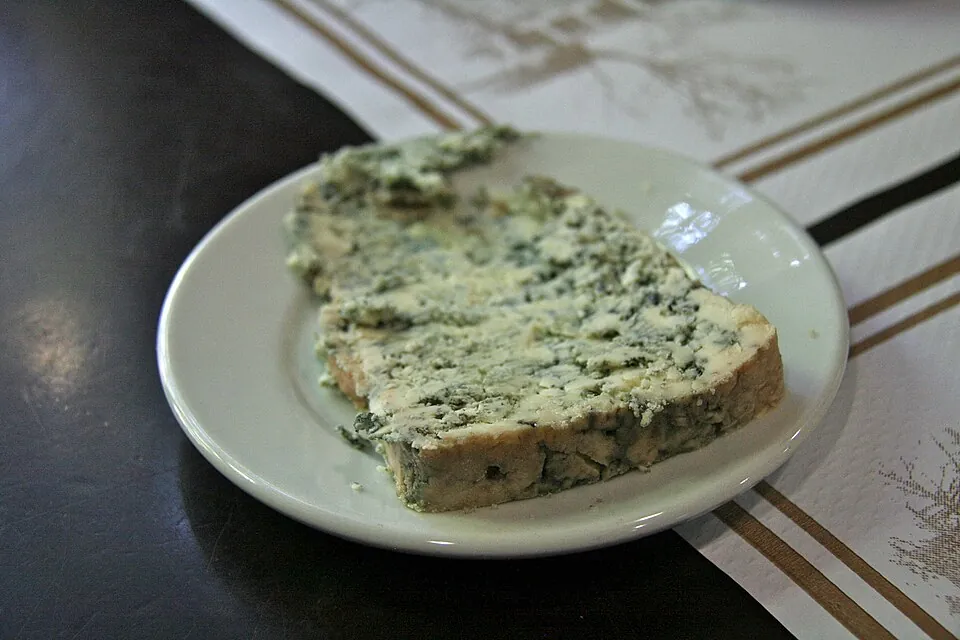
The damp climate and mountain pastures favour a wide variety of cheeses. Cabrales, a strong blue cheese, matures in caves of the Picos de Europa. Gamonéu, smoked and made from cow's, sheep's and goat's milk, is produced in the high pastures of Onís and Cangas de Onís. Afuega'l Pitu is fresh with a dense texture and is sometimes eaten with paprika. Many dairies open to visitors and sell on site.
Cabrales cheese, with its blue veins. Photo: Tamorlan · CC BY-SA 3.0 · Wikimedia Commons
Cider and its culture
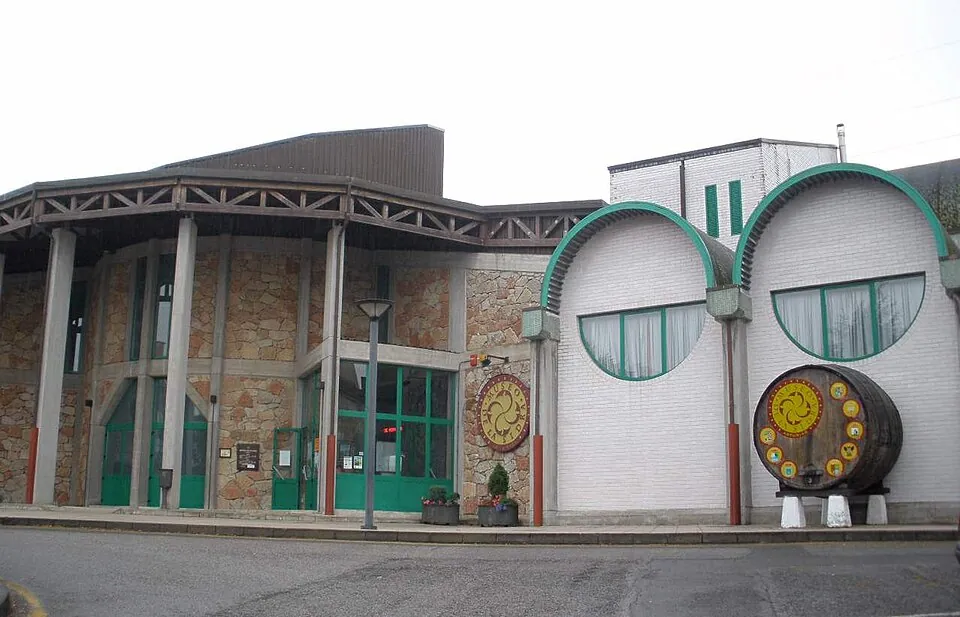
Asturian natural cider is made from apples with no added gas or sugar. It is drunk poured from a height: you raise the bottle in one hand and pour from above into a wide glass held in the other, so the liquid breaks against the glass and gains bubbles. It is served in small amounts, a "culete", and drunk straight away; the last few drops are thrown on the floor to rinse the glass. Villaviciosa is the heart of cider country, and Nava is home to the Asturian Cider Museum. In Oviedo, Gascona street is packed with cider houses, and Gijón also has a strong cider tradition.
The Asturian Cider Museum, in Nava. Photo: Zarateman · CC BY-SA 3.0 · Wikimedia Commons
Where to try it, by area
OviedoCider houses on Gascona street and dishes such as cachopo and the carbayón pastry.
GijónCider houses and seaside restaurants with fresh fish and shellfish.
Villaviciosa and NavaCider presses and museums, plus the Natural Cider Festival of Nava in July.
Cabrales and Cangas de OnísDairies, ageing caves and the high-pasture Gamonéu.
Cudillero, Luarca and LastresFishing ports with fish and Cantabrian seafood.
A simple rule
If in doubt, ask for the house speciality and share a fabada or a cachopo among several people: portions tend to be generous.
Frequently asked questions
How is Asturian cider served?
It is poured from a height into a wide glass to aerate it and drunk straight away, in small amounts called culetes.
What goes in fabada asturiana?
Fabes (large white beans) with compango: chorizo, black pudding and bacon or pork shoulder.